What Causes Black Streaks on Your Roof?
One common source of dark roofing trails is Gloeocapsa magma, algae associated with roof staining. It is familiar across humid Florida communities, including DeBary, Orange City, and Deltona.
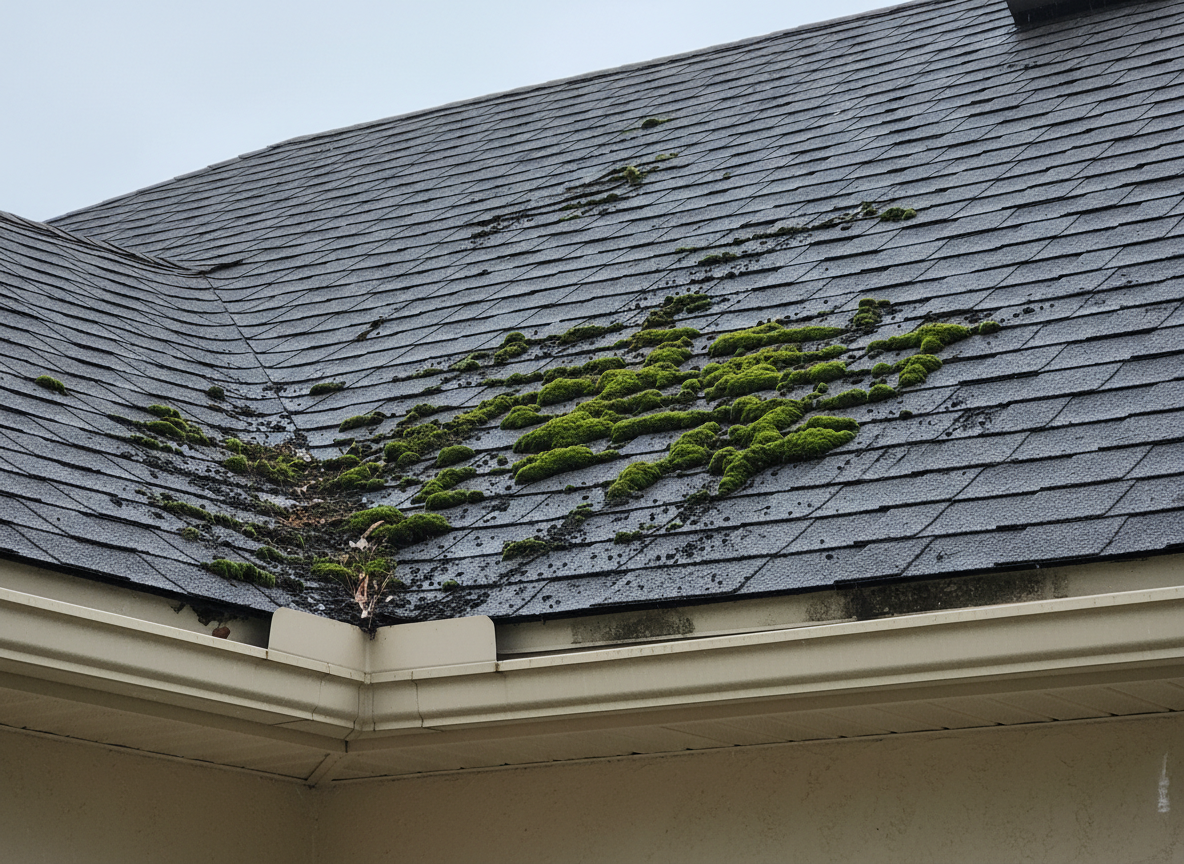
Warmth, moisture, and shaded slopes can encourage buildup over time. Notice where the patches start and whether they follow the same shaded area. Those observations help describe the condition when you ask for an assessment.
Not every discoloration responds to an algae treatment. Aging finishes, rust, and material wear are different concerns. We distinguish suitable organic stains from marks that need another approach, instead of assuming all roof discoloration is the same.
Our Algae Removal Process
Our treatment-based softwashing addresses organic growth without using high-pressure roof washing. The stain type and surface condition guide the process:
- 1Review the pattern and extent of visible staining
- 2Identify the roofing material and treatment suitability
- 3Plan low-pressure application around vulnerable areas
- 4Treat organic buildup and rinse the agreed surfaces
- 5Discuss remaining marks and future maintenance cues
Why Remove Roof Algae?
- Treat the growth associated with dark roof trails
- Improve the appearance of suitable stained surfaces
- Bring roof care into your exterior maintenance plan
- Address staining identified in an association notice
- Avoid aggressive pressure on roofing
- Understand which marks need different treatment
- Set realistic expectations before the visit
Did You Know?
Shaded and sun-exposed slopes can look different on the same roof. Tell us where streaking is most visible, rather than assuming the whole roof has the same buildup. Photos from ground level can help explain your concern.